
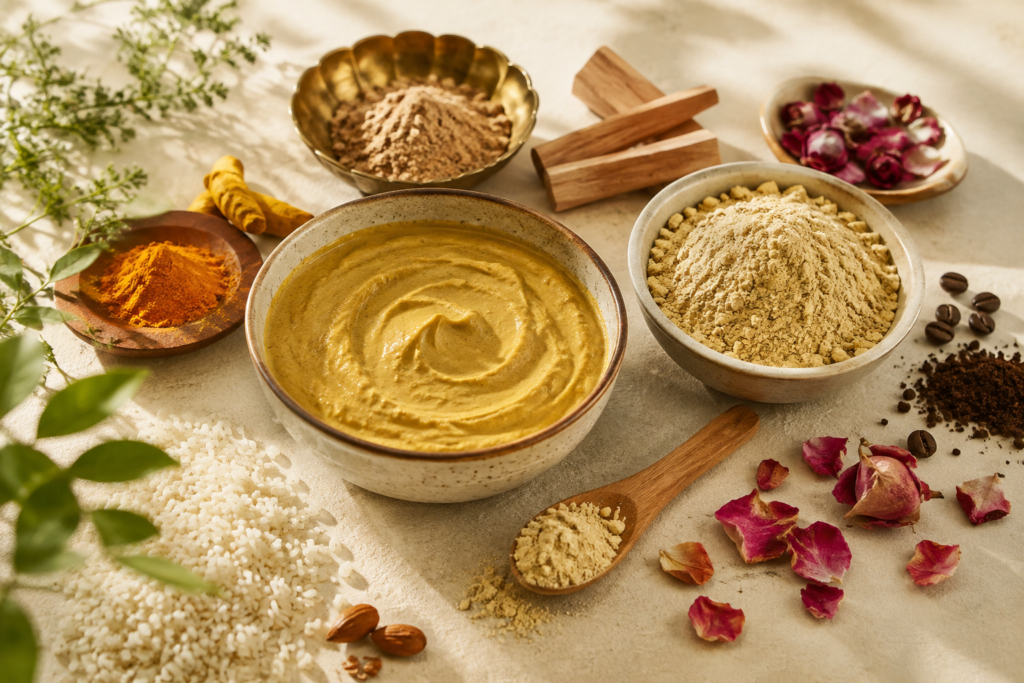
What Is Ubtan? Benefits, Ingredients, Uses & How to Use It Ubtan is a traditional South Asian skincare preparation made by combining powdered natural ingredients into a paste and applying it to the skin. Traditionally, recipes have varied from household to household and may include ingredients such as turmeric, chickpea flour, sandalwood, grains, herbs and other plant-derived materials. Today, Ubtan is no longer limited to wedding rituals or homemade recipes. Ready-made Ubtan powders have made the traditional approach easier to fit into a modern skincare routine. But what exactly is Ubtan? What does it actually do for your skin? Which ingredients are commonly used? And how should you use it without over-exfoliating? This guide explains the traditional idea behind Ubtan, its realistic benefits and limitations, different ways to use it, and what to look for when choosing a ready-made Ubtan.
What’s Covered Here!
- What Is Ubtan?
- Where Did Ubtan Come From?
- What Does Ubtan Do for the Skin?
- Can Ubtan Make Skin Look Brighter?
- Why Do People Still Use Ubtan?
- Common Ingredients in Ubtan
- Natural Does Not Automatically Mean Gentle
- Ubtan Is Not the Same as Harsh Scrubbing
- Why Homemade Ubtan Can Be Inconvenient
- What Is a Ready-Made Ubtan?
- ZORAN ORGANIC UBTAN: A Modern Face & Body Treatment
- What Ingredients Are in ZORAN ORGANIC UBTAN?
- How to Use Ubtan
- What Should You Mix With Ubtan?
- Can You Add Ubtan to Your Existing Face Wash?
- How Often Should You Use Ubtan?
- Is Ubtan Suitable for Sensitive Skin?
- What Results Should You Realistically Expect From Ubtan?
- Which ZORAN UBTAN Variant Should You Choose?
- Can Men Use Ubtan?
- Is Ubtan Better Than Modern Skincare?
- Why Choose a Ready-Made Ubtan Instead of DIY?
- Common Ubtan Mistakes to Avoid
Frequently Asked Questions About Ubtan
- The Bottom Line
What Is Ubtan?
Ubtan is a traditional herbal skincare preparation associated with South Asian personal-care practices. There is no single standardized Ubtan recipe. Different traditional preparations have used different combinations of powdered plants, grains, spices and other natural ingredients. Turmeric, chickpea and sandalwood are among the ingredients that have appeared in traditional and traditional-inspired formulations. A scientific study evaluated several Ubtan formulations prepared from turmeric, chickpea and sandalwood. The researchers investigated their physicochemical properties as well as several laboratory activities, including antioxidant and tyrosinase-related activity. Importantly, this was laboratory research on specific formulations—not proof that every Ubtan product produces the same effects on human skin. That distinction is important. Ubtan is best understood as a traditional skincare approach rather than one fixed formula. A homemade Ubtan prepared in one family can be completely different from a commercial Ubtan purchased from a store. What they share is the basic concept: powdered ingredients are mixed into a preparation that is applied to the skin as part of a cleansing, exfoliating or personal-care ritual.
Where Did Ubtan Come From?
Ubtan has deep roots in South Asian personal-care traditions and is particularly associated with weddings and other special occasions. The familiar pre-wedding Ubtan ritual has traditionally involved applying a paste made from natural ingredients to the bride or groom. The practice has become closely associated with preparing the skin before an important celebration. But Ubtan was never simply a “wedding face pack.” The broader tradition is about using familiar natural ingredients as part of personal care. Similar preparations have been adapted according to regional customs, available ingredients and individual preferences. That is also why there is no universally correct Ubtan recipe. Modern Ubtan products continue this tradition in different ways, with formulations ranging from simple traditional-inspired blends to more elaborate botanical preparations.
What Does Ubtan Do for the Skin?
The most practical way to think about Ubtan is as a powder-based cleansing and physical exfoliation treatment. Depending on its formulation and how it is used, Ubtan may help:
* Remove surface impurities and buildup
* Loosen some dead skin cells from the skin’s surface
* Make rough-feeling skin feel smoother
* Leave the skin feeling clean and refreshed
* Improve the temporary appearance of dull-looking skin
* Give the skin a smoother, more polished feel
The exfoliating effect of a powdered Ubtan comes primarily from the physical action of its particles when the preparation is gently massaged onto the skin. That does not mean that harder scrubbing produces better results. The American Academy of Dermatology recommends gentle application when exfoliating and warns that excessive or aggressive exfoliation can leave skin irritated. It also recommends choosing an exfoliation method and frequency according to your skin type. So the basic rule is simple: Use Ubtan gently. Don’t treat your skin like a surface that needs to be scrubbed clean.
Can Ubtan Make Skin Look Brighter?
It can make skin look fresher and more polished, particularly when surface buildup is removed. But “brightening” needs to be understood realistically. Ubtan should not be presented as a guaranteed skin-whitening treatment, nor should it be expected to permanently change your natural skin tone. Some Ubtan ingredients have been investigated scientifically. For example, laboratory research on specific turmeric-, chickpea- and sandalwood-containing Ubtan formulations found antioxidant and tyrosinase-related activity. However, laboratory findings do not establish that a particular commercial Ubtan will lighten someone’s skin or treat pigmentation. A more sensible expectation is: cleaner-looking, smoother-feeling and more refreshed skin—not a different natural complexion. If persistent dark spots, melasma or other pigmentation are a concern, Ubtan should not replace appropriate dermatological care.
Why Do People Still Use Ubtan?
Part of Ubtan’s appeal is its simplicity. Traditional skincare often relied on a small number of familiar ingredients rather than a complicated routine. A powder could be mixed with water, milk, rose water or another suitable liquid, applied to the skin and rinsed away. There is also a ritual element. For many people, using Ubtan feels different from simply applying another bottled skincare product. It combines preparation, application and cleansing into a short personal-care routine. A modern dry Ubtan powder keeps that basic experience while removing much of the preparation involved in making a traditional recipe from scratch.
Common Ingredients in Ubtan
Because there is no standard Ubtan recipe, ingredient lists can vary considerably. Here are some of the ingredients commonly associated with traditional or traditional-inspired Ubtan preparations.
Turmeric
Turmeric is one of the ingredients most strongly associated with Ubtan. It has a long history of use in South Asian cultural and personal-care traditions. Its major constituent, curcumin, has also been extensively investigated in scientific research. In traditional Ubtan preparations, turmeric contributes to the characteristic colour and botanical profile of the mixture. One practical issue is that turmeric-heavy homemade preparations can be messy and may leave yellow residue on some surfaces or fabrics.
Chickpea Flour
Chickpea flour, commonly known as besan, is another familiar ingredient in South Asian skincare traditions. As a fine powder, it can be incorporated into paste-based preparations and contributes to the texture of many traditional Ubtan recipes.
Sandalwood
Sandalwood has also been used traditionally in South Asian personal-care preparations. Sandalwood powder can be incorporated into dry formulations and contributes to the distinctive botanical character associated with some traditional Ubtan preparations.
Rice Flour
Rice flour is another powdered ingredient used in traditional-inspired skincare preparations. Its dry form makes it convenient to incorporate into ready-made powder formulations that can be mixed immediately before use.
Other Botanical Ingredients
Depending on the formulation, Ubtan may also contain herbs, flowers, oils, clays and other plant-derived ingredients. This explains why two products labelled “Ubtan” can have completely different ingredient lists, textures, aromas and skin-feel experiences. The name Ubtan tells you about the type of skincare tradition behind a product—not necessarily everything that is inside it.
Natural Does Not Automatically Mean Gentle
This is one of the most important points to understand before using Ubtan. Natural does not automatically mean suitable for every skin type. Plant-derived ingredients can still irritate the skin or trigger an allergic reaction in some people. At the same time, synthetic ingredients are not automatically harsh simply because they are synthetic. What matters is the complete formulation, concentration, particle characteristics, application method and frequency of use. This becomes particularly important when a powdered product is being used for physical exfoliation. The American Academy of Dermatology recommends being gentle when exfoliating and avoiding exfoliation on open cuts, wounds or sunburned skin. It also notes that people with dry, sensitive or acne-prone skin may be more susceptible to irritation from mechanical exfoliation.
Ubtan Is Not the Same as Harsh Scrubbing
A common mistake is assuming that more friction means better cleansing. It doesn’t. Aggressive scrubbing can irritate the skin. Dermatologists specifically advise against harsh scrubbing and recommend gentle motions when exfoliating. When using Ubtan:
1. Apply it gently.
2. Use light circular movements if massage is appropriate.
3. Avoid pressing hard.
4. Don’t keep rubbing simply because you think more friction will produce better results.
5. Rinse thoroughly.
6. Follow with an appropriate moisturizer if your skin needs it.
Your goal is to care for the skin—not to remove every last trace of surface texture.
Why Homemade Ubtan Can Be Inconvenient
DIY Ubtan can be enjoyable, especially if you like traditional skincare rituals. But making it regularly requires preparation. You may need to:
* Buy several individual ingredients
* Measure them
* Grind or sift powders
* Maintain consistent proportions
* Mix a fresh batch
* Clean up afterward
There is also the issue of consistency. One homemade batch may be smooth while another is grainier. The proportions can change, and the experience can vary from one preparation to the next. That isn’t necessarily a problem if you enjoy making your own Ubtan. But if your priority is convenience and consistency, a ready-made dry formulation has an obvious advantage.
What Is a Ready-Made Ubtan?
A ready-made Ubtan brings the ingredients together into a prepared dry formulation. Instead of keeping several powders and botanical ingredients separately, you simply measure the required amount and mix it with your chosen liquid. The basic process remains familiar:
Mix → Apply → Use gently → Rinse.
The difference is that most of the preparation has already been done for you. This is where traditional-inspired skincare can fit more easily into a modern routine.
ZORAN ORGANIC UBTAN: A Modern Face & Body Treatment
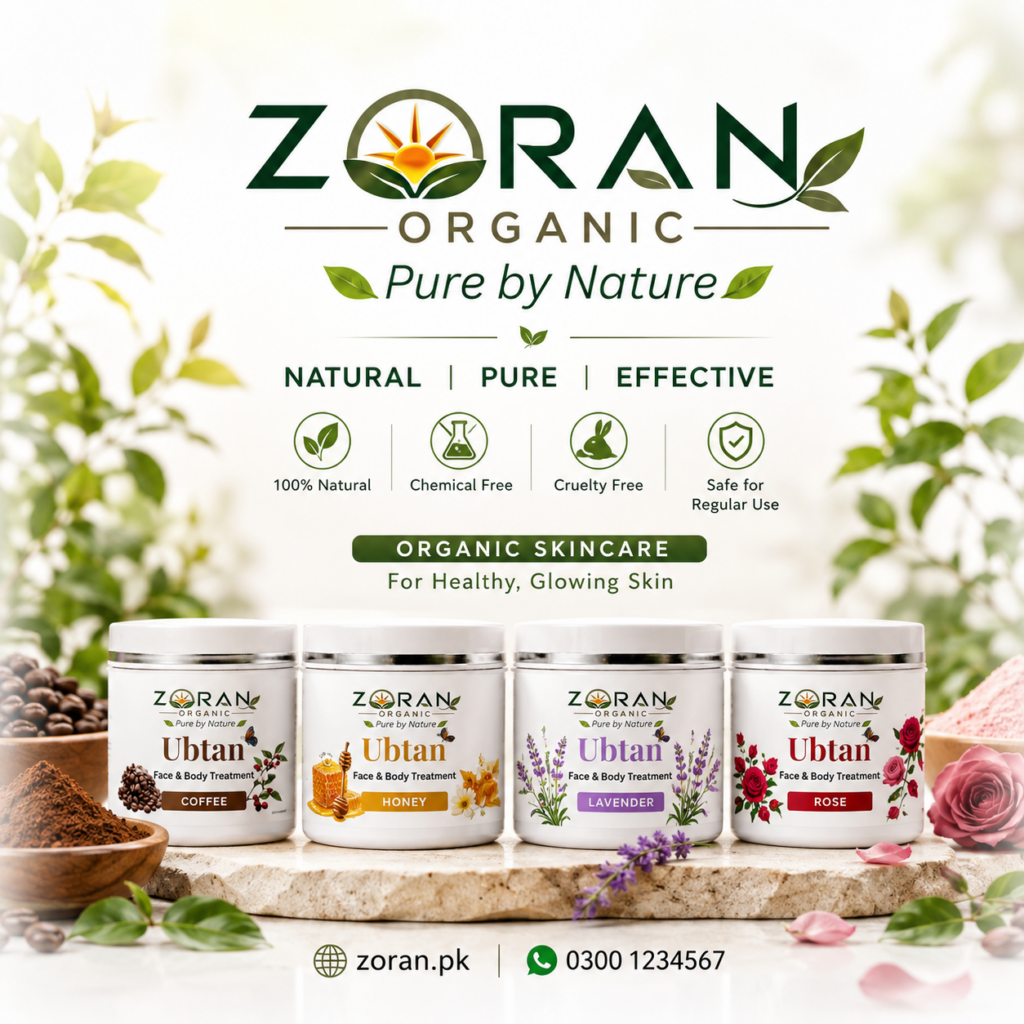
ZORAN ORGANIC UBTAN is a dry skincare powder inspired by the traditional Ubtan approach and developed for use on both the face and body. Rather than limiting the product to one type of treatment, Zoran designed it as a multipurpose skincare preparation. Depending on how you prepare and apply it, it can be used as:
* A face-cleansing treatment
* A face mask
* A facial treatment
* A natural cleansing preparation
* A physical exfoliating treatment
* A body exfoliating treatment
* A manicure and pedicure treatment
It can also be used on areas including the neck, arms, hands, underarms, legs, feet, elbows, knees and back. That makes the concept fairly simple: One Ubtan powder, multiple ways to use it.
What Ingredients Are in ZORAN ORGANIC UBTAN?
All four ZORAN UBTAN variants share the same core formulation:
* Rice Flour
* Turmeric
* Sandalwood Powder
* Coconut Oil
* Almond Oil
* Mineral-Rich Clay
* Proprietary Herbal Blend
Each variant then has its own signature ingredient profile.
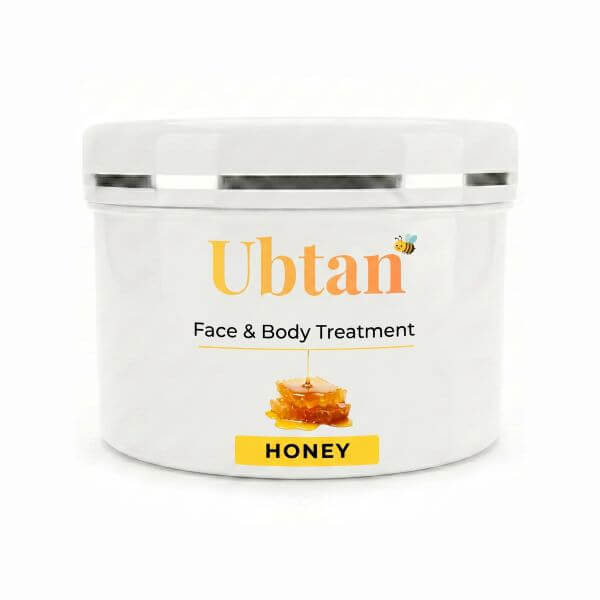
Honey Ubtan
The Honey Edition contains Honey and is suited to people who prefer a softer, nourishing-feeling botanical experience.
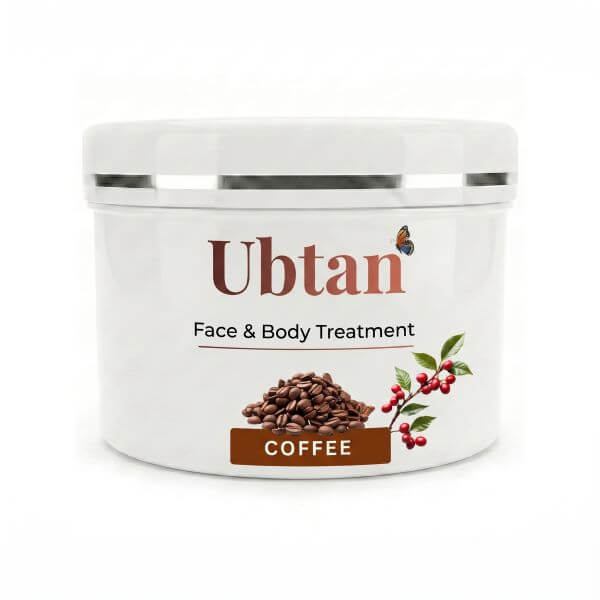
Coffee Ubtan
The Coffee Edition contains Coffee Powder, giving it a distinctive coffee character and a more invigorating exfoliating experience.
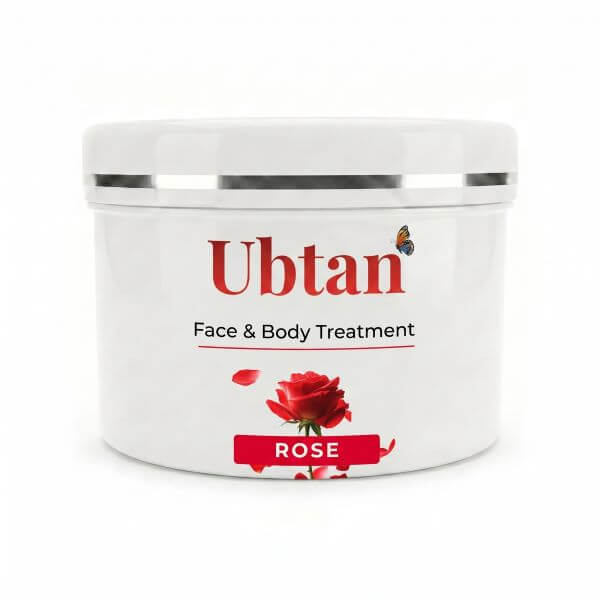
Rose Ubtan
The Rose Edition contains Rose Water and Rose Petal Powder, giving it a distinctly floral character.
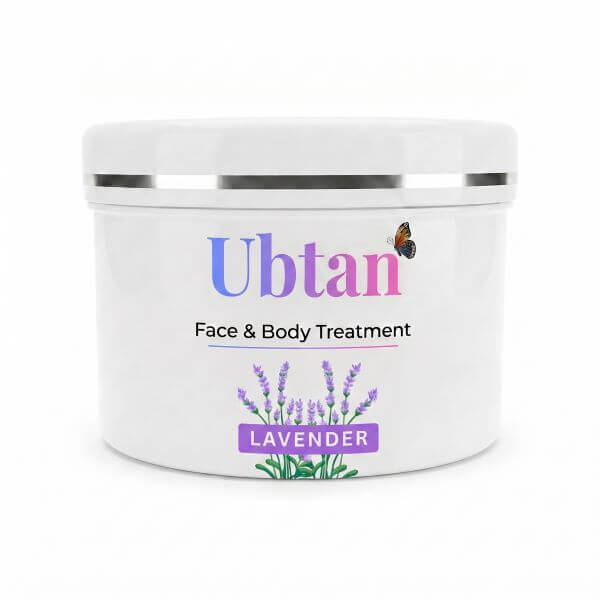
Lavender Ubtan
The Lavender Edition contains Lavender Essential Oil, giving it a distinctive botanical and lavender character. The four variants therefore share the same Ubtan foundation while offering different ingredient profiles and sensory experiences.
How to Use Ubtan
There is no single way to use Ubtan. The consistency and amount can be adjusted depending on whether you want a quick cleansing application, a face mask, a facial treatment or body care.
Ubtan as a Face-Cleansing Treatment
For a quick cleansing application, use a small amount of Ubtan powder and add enough water to create a thin paste. Apply it to damp skin. If you massage it, use very light pressure for a short period, then rinse thoroughly. Avoid the eye area. If your skin is sensitive or easily irritated, start with occasional use rather than assuming that frequent exfoliation is necessary.
Ubtan as a Face Mask
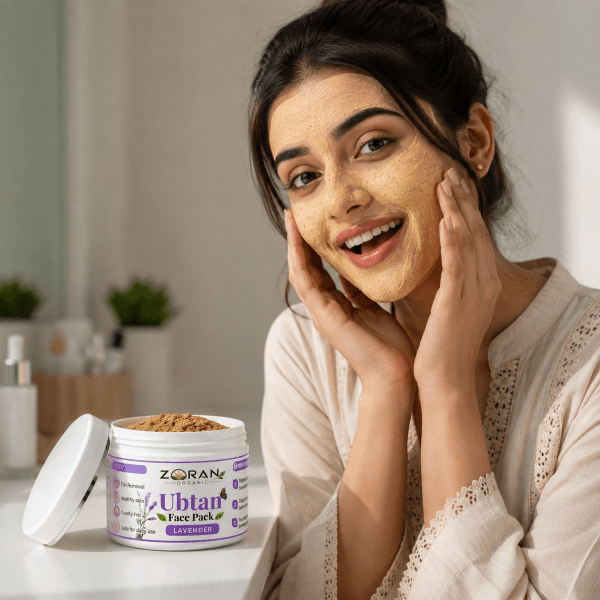
For a mask-style application, prepare a thicker paste. Apply an even layer to the face and neck while avoiding the eye area. Leave it on for a short period according to your chosen formulation and skin tolerance, then rinse gently. There is no advantage to forcing a mask to become extremely dry and uncomfortable. The AAD recommends following product directions for facial masks and notes that leaving a mask on longer than intended or using it too often can contribute to irritation.
Ubtan as a Facial Treatment
A thicker paste can also be used as part of a short facial-care ritual. Apply it gently, allow it to sit briefly if desired, then rinse thoroughly. The important point is not to turn the treatment into an aggressive scrub.
Can You Use Ubtan on Your Body?
Yes. One of the practical advantages of a multipurpose Ubtan is that it doesn’t have to stop at the face. It can be incorporated into care routines for areas such as: Arms • Legs • Hands • Feet • Elbows • Knees • Underarms • Back Body skin can also develop rough or dull-feeling areas, particularly around the elbows, knees, hands and feet. Prepare the Ubtan into a suitable paste, apply it to damp skin and massage gently where appropriate. Be more cautious around sensitive areas and avoid using it on broken, sunburned or irritated skin.
Ubtan for Manicure & Pedicure Care
Ubtan can also be incorporated into a simple home manicure or pedicure routine. Prepare a smooth paste and apply it to the hands or feet. Massage gently rather than scrubbing aggressively. Leave it on briefly if desired, then rinse and follow with a moisturizer. This can be particularly useful when you want to give areas such as the hands, feet, elbows or knees some additional attention without buying a separate exfoliating product for each area.
What Should You Mix With Ubtan?
The liquid you choose changes the consistency and overall feel of the preparation.
Water
The simplest option. Use water when you want a straightforward Ubtan paste without introducing another ingredient.
Rose Water
Rose water gives the preparation a naturally floral character and can be used when you prefer a more refreshing-feeling mixture.
Liquid Milk
Milk can be used to create a richer-feeling paste.
Dry Milk + Water
For ZORAN ORGANIC UBTAN, dry milk mixed with water is the preparation method Zoran recommends based on its own product testing across different skin types. For approximately 2 tablespoons of Ubtan powder, add around 1 teaspoon of dry milk, then add enough water to create a smooth, spreadable paste. Adjust the amount of water according to the consistency you prefer. This is a Zoran testing-based recommendation, not a universal dermatological rule for every Ubtan formulation or every person.
Can You Add Ubtan to Your Existing Face Wash?
It is possible to experiment with combining a small amount of Ubtan powder with a face wash that you already know your skin tolerates. However, this should not automatically be considered better than using either product on its own. Adding a powdered Ubtan introduces a physical exfoliating component, so the combination may produce more friction than your usual cleanser. If you decide to try it:
* Start with a small amount.
* Use it occasionally.
* Massage very gently.
* Stop if your skin becomes irritated.
* Don’t combine it with an already aggressive exfoliating routine.
If your existing face wash already contains ingredients that can increase skin sensitivity, extra exfoliation may be inappropriate. The AAD recommends considering the other skincare products you already use before adding exfoliation to your routine. For sensitive skin, keeping the routine simple is generally the safer approach.
How Often Should You Use Ubtan?
There is no single frequency that is right for everyone. The appropriate schedule depends on:
* Your skin type
* The Ubtan formulation
* How much physical exfoliation it provides
* How you apply it
* What other skincare products you use
* How your skin responds
The AAD recommends adjusting exfoliation frequency according to skin type and method and warns against over-exfoliation. Rather than treating a fixed schedule as a rule, use your skin’s response as a guide. If your skin becomes persistently red, irritated, tight, burning or unusually dry, reduce or stop exfoliation. More frequent use does not automatically mean better results.
Is Ubtan Suitable for Sensitive Skin?
Sensitive skin deserves extra caution with any exfoliating product. If you have sensitive or easily irritated skin:
* Start with a small amount.
* Use gentle application.
* Avoid vigorous massage.
* Begin with less frequent use.
* Don’t apply it to broken or irritated skin.
* Consider testing the product before applying it to your entire face.
The AAD recommends testing new skincare products on a small area before wider use. If a product causes redness, itching, swelling or another reaction, discontinue use. And if you have an existing skin condition or are under dermatological treatment, it is sensible to ask your dermatologist before introducing an exfoliating product.
What Results Should You Realistically Expect From Ubtan?
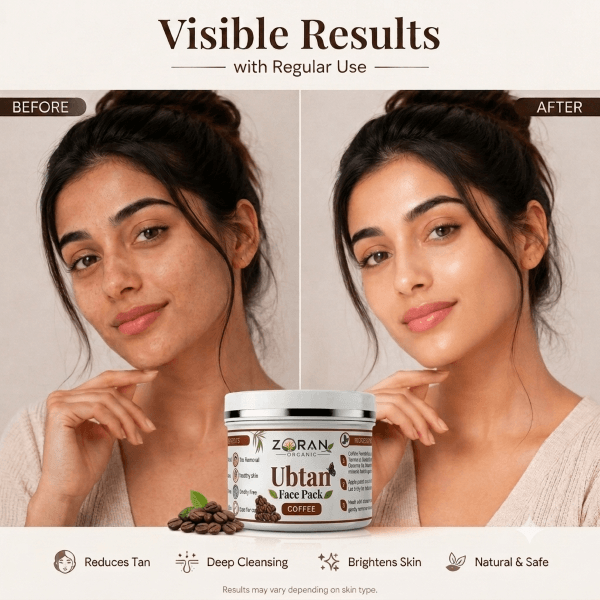
Ubtan is not a miracle treatment, and it should not be marketed as one. A reasonable expectation from an appropriately formulated Ubtan used gently is skin that feels:
* Cleaner
* Smoother
* Softer
* More refreshed
Gentle exfoliation may also make dull-looking skin appear more polished by removing some surface buildup. But individual results vary. Your skin type, existing skincare routine, frequency of use and application technique all matter. The most useful way to judge a Ubtan is therefore not by dramatic overnight promises, but by whether it fits comfortably into your routine and leaves your skin feeling clean and cared for without irritation.
Which ZORAN UBTAN Variant Should You Choose?
There isn’t one universally “best” variant. The four ZORAN variants share the same core Ubtan foundation, so the easiest way to choose is to consider the signature ingredient and the experience you prefer.
Honey
Choose Honey if you prefer a softer, nourishing-feeling botanical experience.
Coffee
Choose Coffee if you prefer the distinctive character of coffee and a more invigorating exfoliating experience.
Rose
Choose Rose if you enjoy a fresh, floral skincare experience.
Lavender
Choose Lavender if you prefer a distinctive botanical profile featuring lavender essential oil. If you are unsure, choosing based on the ingredient profile and sensory experience you personally prefer is more useful than looking for a universally “best” variant.
Can Men Use Ubtan?
Yes. Ubtan is not inherently a women’s skincare product. Its basic functions—cleansing, physical exfoliation and general personal care—are not gender-specific. Men can use Ubtan on the face, neck, hands, arms, feet and other appropriate areas just as women can. A multipurpose product such as ZORAN ORGANIC UBTAN can also simplify the routine by allowing one formulation to be used across different areas of the face and body.
Is Ubtan Better Than Modern Skincare?
Not necessarily. And it doesn’t have to be. Modern skincare and traditional-inspired skincare serve different purposes. Modern skincare offers products designed around specific functions, including cleansers, moisturizers, sunscreens, retinoids and chemical exfoliants. Many of these approaches have substantial scientific evidence supporting particular uses. Ubtan offers something different: a traditional-inspired powder-based approach to cleansing and physical exfoliation that can be simple, versatile and enjoyable. There is no need to turn skincare into a choice between “natural” and “modern.” A sensible routine can include traditional-inspired products where they fit your needs while still using evidence-based skincare products for concerns that require them.
Why Choose a Ready-Made Ubtan Instead of DIY?
Traditional DIY Ubtan has its charm. But convenience matters. A ready-made powder means you don’t have to keep several ingredients in separate containers, measure them every time or repeatedly recreate the same recipe. With a prepared Ubtan:
For cleansing: make a thinner paste.
For a mask: make a thicker paste.
For body care: prepare it according to the area and use it gently.
For hands and feet: incorporate it into your manicure or pedicure routine.
The basic product stays the same; the preparation and application can change according to the purpose. That is the practical advantage of a well-designed ready-made Ubtan.
Common Ubtan Mistakes to Avoid
Ubtan is relatively simple to use, but a few mistakes can undermine the experience.
1. Scrubbing too hard
More friction is not better exfoliation. Use light pressure.
2. Using it too frequently
Your skin needs time to recover. Exfoliating more often than your skin tolerates can lead to irritation.
3. Applying it to irritated skin
Avoid exfoliation on open cuts, wounds or sunburned skin.
4. Expecting skin whitening
Ubtan should not be treated as a guaranteed skin-whitening product.
5. Assuming “natural” means risk-free
Botanical ingredients can still cause irritation or allergic reactions.
6. Combining too many exfoliating products
If your routine already includes strong exfoliating products or ingredients that make your skin more sensitive, adding additional physical exfoliation may be too much.
7. Ignoring your skin’s response
If your skin repeatedly becomes irritated, don’t continue simply because a product is described as natural.
Frequently Asked Questions About Ubtan
What is Ubtan used for?
Ubtan is traditionally used as a skincare preparation for cleansing and exfoliation. Depending on its formulation, it can be prepared as a face treatment, mask, body exfoliating treatment or part of a general personal-care routine.
Is Ubtan good for the face?
Ubtan can be used on the face when the formulation is appropriate and it is applied gently. Because powdered Ubtan can provide physical exfoliation, people with sensitive or easily irritated skin should introduce it cautiously.
Can Ubtan be used on the body?
Yes. Ubtan can be used on areas such as the arms, legs, hands, feet, elbows, knees, underarms and back, provided the skin is not broken or irritated.
Can I use Ubtan every day?
There is no universal daily-use rule for Ubtan. Frequency should depend on the formulation, how it is used and how your skin responds. Because physical exfoliation can cause irritation when overdone, start conservatively and adjust according to your skin.
Can Ubtan be used as a face wash?
Yes. A small amount can be mixed with water to form a thin paste and applied gently to damp skin before rinsing. Avoid vigorous scrubbing.
Can Ubtan remove dark spots?
Ubtan may remove some surface buildup and make skin look fresher, but it should not be considered a guaranteed treatment for dark spots or pigmentation. Persistent pigmentation should be evaluated using appropriate skincare or professional dermatological advice.
Can I mix Ubtan with milk?
Yes. Ubtan can be prepared with liquid milk if that suits your routine. ZORAN also recommends dry milk mixed with water based on its own product testing.
Can I mix Ubtan with rose water?
Yes. Rose water can be used to prepare a Ubtan paste.
Can men use Ubtan?
Yes. Ubtan can be used by both men and women.
Is natural Ubtan safe for everyone?
No skincare product can be assumed to suit everyone. Natural ingredients can still cause irritation or allergic reactions. Test a new product before broader use and stop if you develop a reaction.
Does Ubtan whiten skin?
Ubtan should not be regarded as a skin-whitening treatment. It may help remove surface buildup and leave skin looking cleaner and more refreshed, but it should not be expected to permanently change your natural skin tone.
How do I choose between different Ubtan variants?
Look at the actual ingredient list rather than choosing solely because a product is called Ubtan. If the basic formulation is similar, the signature ingredients and the experience you prefer can help you decide.
The Bottom Line
Ubtan is not one miracle recipe. It is a traditional South Asian approach to skincare built around powdered natural ingredients that are mixed into a preparation and applied to the skin. Its appeal lies in its simplicity: cleansing, physical exfoliation and personal care can become one short ritual rather than a complicated routine. Modern ready-made formulations make that tradition easier to use without requiring you to measure and mix several ingredients every time. If you want to explore that approach, ZORAN ORGANIC UBTAN – Face & Body Treatment brings together a common Ubtan foundation with four different signature ingredient profiles: Honey, Coffee, Rose and Lavender. The important thing is to use Ubtan realistically. Be gentle. Don’t over-exfoliate. Choose a formulation that suits your preferences. And pay attention to how your skin responds. That is a much more useful way to bring a traditional skincare practice into a modern routine.
Explore ZORAN ORGANIC UBTAN – Face & Body Treatment
If you want to try more than one variant, you can also explore the available Ubtan bundles.
Explore ZORAN UBTAN Bundles